Omegle Alternatives That Actually Feel Different (2026)
Most Omegle alternatives feel the same. Here's why—and what a real alternative to random video chat actually looks like.
By Mark Gjura ·
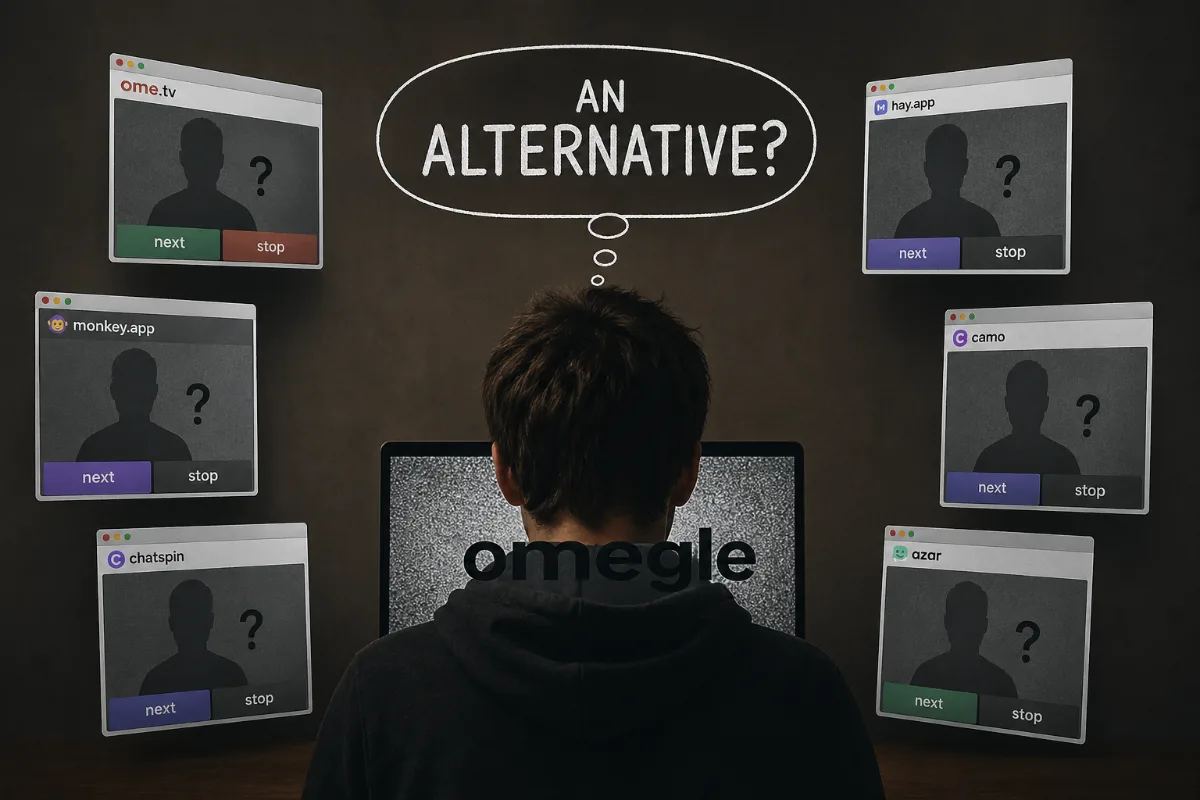
You Keep Calling It an Alternative. So Why Does It Feel Exactly the Same?
The word alternative does something to your brain.
It implies escape. A door you haven't opened yet. Something on the other side of the thing that wasn't working. When Omegle went dark, millions of people went looking for an alternative — and that word carried real weight. Not just "another platform." Something different. Something new.
So they clicked. They signed up. They hit the camera button.
And got... Omegle. With a different logo.
---
The Label Is Doing a Lot of Heavy Lifting
Merriam-Webster defines alternative as something that implies "a need to choose one and reject another possibility." Not a variation. Not a reskin. A genuine fork in the road — where choosing one thing means leaving another behind.
By that standard, most of what's been marketed as an Omegle alternative isn't one.
Random matchmaking. Two strangers. A camera. A skip button. Repeat. The platforms that dominate the "Omegle alternative" search results are, functionally, Omegle. Same format. Same dead air. Same instinct to skip the second it gets awkward. The only thing that changed is where the servers are hosted.
That's not a choice between two different possibilities. That's the same possibility, rebranded.
---
Rinse. Repeat. Call It New.
Here's what actually happened after Omegle shut down: people didn't go looking for something better. They went looking for something familiar.
And the market gave it to them.
A wave of platforms launched — some already existed, some spun up fast — and they all made the same pitch: we're the alternative. Different UI, same soul. Or rather, same absence of one. You'd join, you'd chat, you'd skip, you'd get bored. Then a new one would launch. You'd migrate. Same thing.
We broke down exactly how similar these platforms actually are in our Omegle vs. OmeTV vs. Monkey vs. What's The Vibe comparison — and the answer isn't flattering for most of them. When you strip away the branding, you're looking at nearly identical products.
Is it still fun? Sure. Sometimes. Random video chat has a novelty to it that doesn't fully die. But novelty has a half-life. And when the skip cycle kicks in — when you're twenty strangers deep and haven't had a real conversation — the fun drains out pretty fast.
---
What "Alternative" Actually Promises
Think about where the word shows up in culture and what it means when it does.
Alternative music didn't just mean music that wasn't on the radio. It was raw. It was weird. It pushed back against something polished and safe. Alternative medicine isn't just medicine with different pills — it's a different philosophy about the body. Alternative energy isn't just energy that isn't coal — it's a different relationship with how we power things.
In every case, "alternative" means the thing underneath changed. Not just the surface.
So when someone calls their random video chat platform an Omegle alternative, the word is promising something. A different philosophy. A different answer to the question of what happens when two strangers meet online. A different relationship with the format.
Most of them aren't delivering that. They're just delivering Omegle.
---
What Raw and New Actually Looks Like
The thing about the current landscape of Omegle alternatives in 2026 is that the format itself isn't broken. Random connection is genuinely compelling — the idea that you could talk to anyone, anywhere, with zero context, has real appeal. The problem is what happens inside the format once you're there.
Two strangers. Camera on. Nothing to do.
The skip button exists because nothing was designed to happen before it. No shared ground, no reason to stay, no moment where the conversation finds its footing. So people skip. And the platform gets labeled as full of bots and weirdos, and a new one launches, and the cycle continues.
An actual alternative would answer that problem. Not "Omegle but our servers are faster." Something structurally different. Something that gives people a reason to stay past the first ten seconds.
Conversation games do that. Instead of hoping chemistry materializes from nothing, you give two strangers something to do together — a format that pulls something real out before the skip instinct fires. That's what Who Dis? is built around. Not a gimmick. A mechanism for the thing that was missing.
Vibe matching does it too. Showing up to a random video chat already knowing something about who you're about to talk to — that you're both there for the same energy, whether that's comedy, gaming, music, whatever — changes the whole texture of the interaction. It's the difference between walking into a party where you know nobody and walking into a room where everyone's there for the same reason you are. Same randomness. Completely different feel. That's the logic behind What's The Vibe's approach vs. something like the Monkey app — the match means something before the conversation starts.
---
You Know the Difference When You Feel It
The honest version of this conversation is simple: you've used the other platforms. You know what the rinse-and-repeat version feels like. You know the difference between opening an app and feeling like something might actually happen — and opening one that feels like homework.
An alternative isn't a different UI. It's a different answer to why you opened the app in the first place.
If you want to see what that actually feels like, What's The Vibe is it. Pick a vibe. Play a game. Talk to someone who shows up for the same reason you did.
That's an alternative.
Frequently asked questions
Why do most Omegle alternatives feel exactly the same?
Because they copy the format without fixing what was broken inside it. Random matchmaking, two strangers, a camera, and a skip button — that's the whole product. When nothing is designed to happen in the first ten seconds, the skip instinct takes over and you're right back where you started. A different UI doesn't change that. The structure underneath has to change.
Is random video chat actually worth using anymore?
The format isn't the problem. The idea of talking to a random stranger with zero context still has genuine appeal — that hasn't gone anywhere. What's worn out is the empty version of it.
Is the Omegle era actually over or are we just pretending it is?
Depends what you mean by the Omegle era. If you mean the site — yeah, it's gone. If you mean the format, it's absolutely still running, just under about forty different names. The era that's actually over is the one where that was enough. People have lapped the skip cycle enough times to know what they're not getting.
What's the difference between random video chat and actually meeting someone random?
In real life, randomness comes with context. You're at the same show, the same gym, the same party. There's already something there before either of you opens your mouth. Online random video chat stripped all of that out and called the emptiness a feature. It isn't. Context isn't the enemy of spontaneity — it's what makes spontaneity possible.
Try it yourself
Start a vibe-matched video chat on What's The Vibe — free, no sign-up.
Related reading
- Is Random Video Chat Safe? An Honest 2026 Guide
- Uhmegle Alternative in 2026: Honest Look at the Omegle Clone
- Chatroulette vs Omegle: What Happened to Both (2026)
- Random Video Chat With Rooms, Vibes & Energy What's The Vibe
- Not Omegle. Not a Dating App. Your Kind of Weird.
- Emerald Chat Alternative 2026: Better Options (The Bar Is Low)