Omegle Alternatives: Why Random Video Chat Hasn’t Evolved
Why do Omegle alternatives feel the same? Explore the skip culture problem, safety issues, and what the next generation of video chat needs to succeed.
By Mark Gjura ·
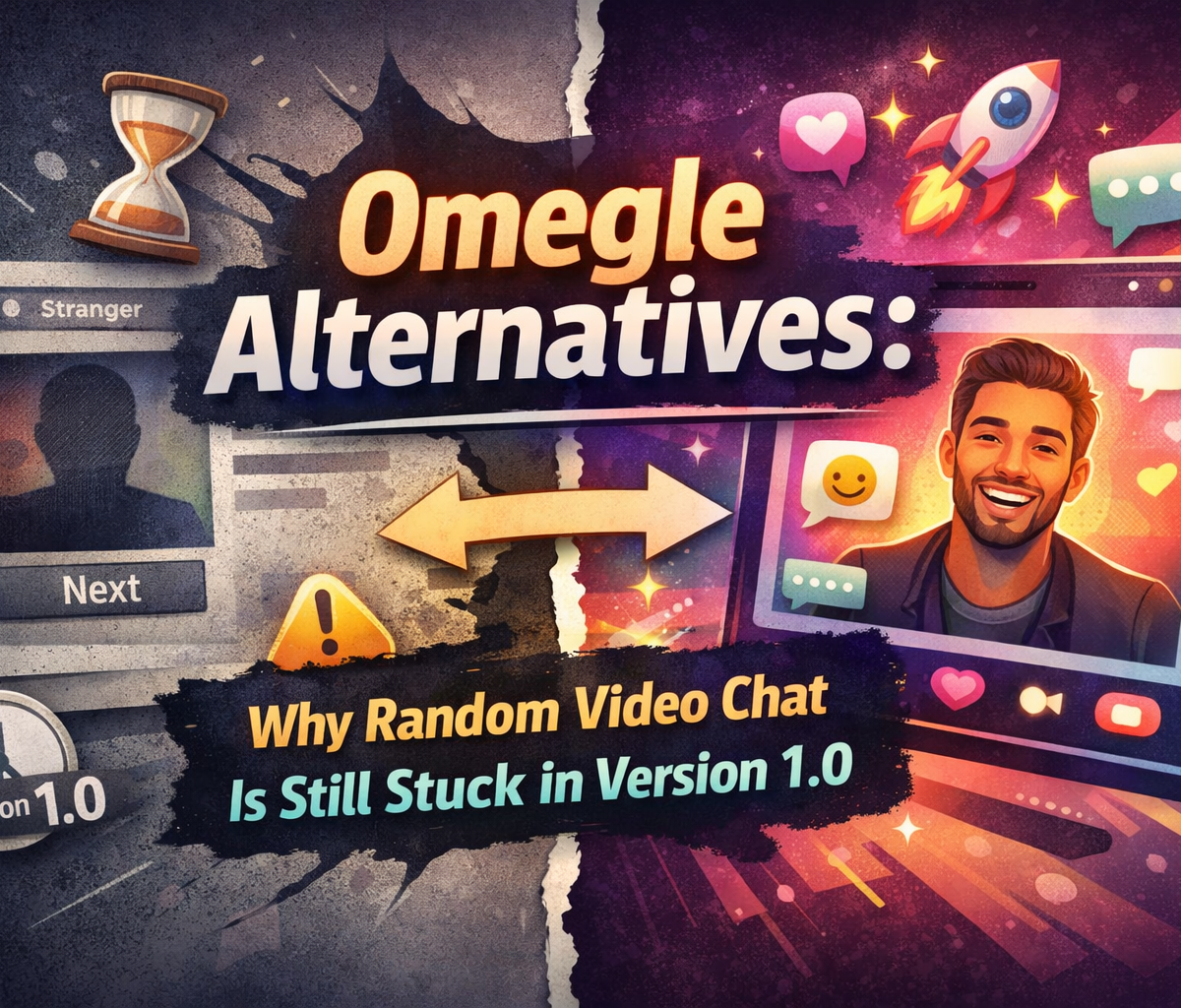
Omegle Alternatives Explained: Why Random Video Chat Is Still Stuck in Version 1.0
For nearly two decades, random video chat platforms like Omegle have looked almost exactly the same.
A stranger appears. You say hi. Maybe you ask where they’re from. Maybe you skip. Maybe they skip you. Occasionally it’s fun, sometimes awkward, sometimes uncomfortable. Then you repeat the cycle.
Platforms like Omegle defined this format for an entire generation. And despite the internet evolving at a blistering pace social feeds becoming algorithmically sophisticated, creator tools exploding, communities forming around every niche imaginable random video chat has barely moved.
Sure, there are countless Omegle alternatives today. But if we’re being honest, most of them feel like the same product wearing a fresh UI.
So the question isn’t whether people still enjoy random video chat. They clearly do. Hundreds of millions of users prove that.
The real question is:
Why has the evolution of video chat stalled in version 1.0?
Quick Comparison: Omegle-Style Chat vs Next-Gen Video Chat
| Feature | Traditional Omegle-Style Chat | Next-Gen Video Chat |
|---|---|---|
| Matching | Pure randomness | Context-aware matching |
| Conversation Flow | Awkward small talk | Built-in prompts & signals |
| Skip Culture | Dominant behavior | Reduced through intention |
| Safety | Reactive moderation | Safety by design |
| Retention | Short sessions | Longer, meaningful chats |
The Original Magic of Random Video Chat Platforms
When Omegle launched in 2009, it felt radical.
The idea of instantly connecting face-to-face with a stranger anywhere in the world was genuinely novel. There were no profiles, no followers, no expectations. Just raw, unfiltered human interaction.
That simplicity was the product.
For early users, random video chat felt:
- Exciting and unpredictable
- Slightly dangerous in a thrilling way
- Refreshingly unscripted compared to curated social media
But novelty has a shelf life.
The Biggest Problems With Omegle and Random Video Chat Today
Despite massive user adoption and endless clones, random video chat still suffers from the same core issues it had years ago.
1. The Skip Culture Problem
The skip button has quietly become the dominant interaction.
Most sessions go like this:
- Hi
- Hi
- skip
Instead of conversation, users are trapped in an endless loop of micro judgments. Attention spans are measured in milliseconds. No context, no patience, no reason to stay.
Ironically, the very randomness that made these platforms fun now actively prevents connection.
2. “I Don’t Know What to Say” Fatigue
Random video chat asks users to perform without giving them a script.
No shared interest. No prompt. No reason to be there beyond killing time.
After a few matches, users hit conversational burnout. The same small talk repeats until skipping feels easier than trying.
3. Safety Hasn’t Kept Up
Unwanted nudity, grooming, and uncomfortable encounters are not new problems. They’ve existed since day one.
What’s shocking isn’t that these issues exist — it’s that many platforms still treat them as unavoidable side effects rather than solvable design failures.
Moderation has improved incrementally, but the core structure that enables abuse remains unchanged.
Omegle Alternatives With a Fresh UI — But the Same Experience
Search for Omegle alternatives and you’ll find dozens of platforms promising something new.
But load them up, and the experience is nearly identical:
- Random pairing
- Instant video
- Minimal context
- Skip-first behavior
A new color palette or smoother animations doesn’t equal evolution.
Most alternatives haven’t rethought why people are matching — only how they look while doing it.
Why Has Random Video Chat Stopped Evolving?
1. The Original Formula Still “Works”
Random video chat continues to attract users because it taps into something primal: curiosity.
As long as people are bored and lonely, they’ll click.
2. Design Is Harder Than Moderation
It’s easier to add filters and report buttons than to rethink the entire interaction model.
True evolution requires reimagining:
- Why users are matched
- What happens before and after a call
- How context is created
3. The Market Rewards Familiarity
When users search for Omegle alternatives, they often expect the same experience.
Radical changes feel risky — both for builders and users. So platforms play it safe, copying what’s familiar instead of challenging it.
What the Next Generation of Omegle Alternatives Actually Needs
Context Before Connection
Humans connect better when they know why they’re talking.
This idea is rooted in behavioral science — something we explore deeply in The Psychology Behind Meaningful Video Chat.
Fewer Skips, More Signals
The skip button shouldn’t be the primary interaction.
Better matching signals — even lightweight ones — can shift behavior from judgment to curiosity.
Built-In Conversation Design
Good conversations don’t happen by accident.
Prompts, structured moments, and subtle guidance can help strangers move past surface-level small talk without killing spontaneity.
Safety by Design, Not Afterthought
The safest platforms aren’t the ones with the most rules — they’re the ones whose design discourages bad behavior in the first place.
How What’s The Vibe Reimagines Random Video Chat
What’s The Vibe exists because random video chat doesn’t need to be thrown away — it needs to be tuned up.
Instead of pretending version 1.0 is enough, What’s The Vibe asks a different question:
What if strangers had a reason to talk before they ever said hi?
By adding context, intention, and conversation-first design, video chat becomes less about skipping and more about staying.
If you’re interested in why safety-by-design matters for the future of video platforms, we break this down further in Why Omegle Failed at Safety — and What Video Chats in 2026 Must Do.
The Future of Omegle Alternatives and Random Video Chat
The next generation of video chat won’t win by being louder, flashier, or more extreme.
It will win by being more human.
People don’t want infinite strangers — they want meaningful moments, even if they’re brief.
Random video chat isn’t dead.
It’s just overdue for version 2.0.
And until platforms move beyond fresh UI and start redesigning the experience itself, the evolution will remain stalled — no matter how many Omegle alternatives exist.
If you’re curious what video chat looks like when context comes first, explore What’s The Vibe — where conversations start with a reason, not a skip.
Frequently asked questions
Why do most Omegle alternatives feel the same?
Most Omegle alternatives feel the same because they copy the original format without changing the core experience. Even with a fresh UI, the underlying mechanics random pairing, no context, instant skipping remain unchanged. Without redesigning how conversations start, platforms struggle to evolve beyond version 1.0.
Is random video chat still popular?
Yes, random video chat is still popular and attracts hundreds of millions of users worldwide. Its appeal comes from spontaneity and curiosity. However, popularity doesn’t mean the experience has improved. Many of the same issues from early video chat platforms still exist today.
Are there Omegle alternatives with built-in games?
Yes, What's The Vibe includes conversation games like Virtual Court and Walking Red Flag that give users something specific to talk about, reducing awkward silence and creating longer, more engaging conversations.
Try it yourself
Start a vibe-matched video chat on What's The Vibe — free, no sign-up.
Related reading
- Random Video Chat Alternatives & Games
- Why Most 'Omegle Alternatives' Aren't Actually Alternatives
- The Spotlight Effect in Random Video Chat
- Why Video Chat Without Context Forces Performance
- Comedy Is the Fastest Way to Connect on Omegle Alternatives
- The Lie Omegle Alternative Tells You About Making Friends